
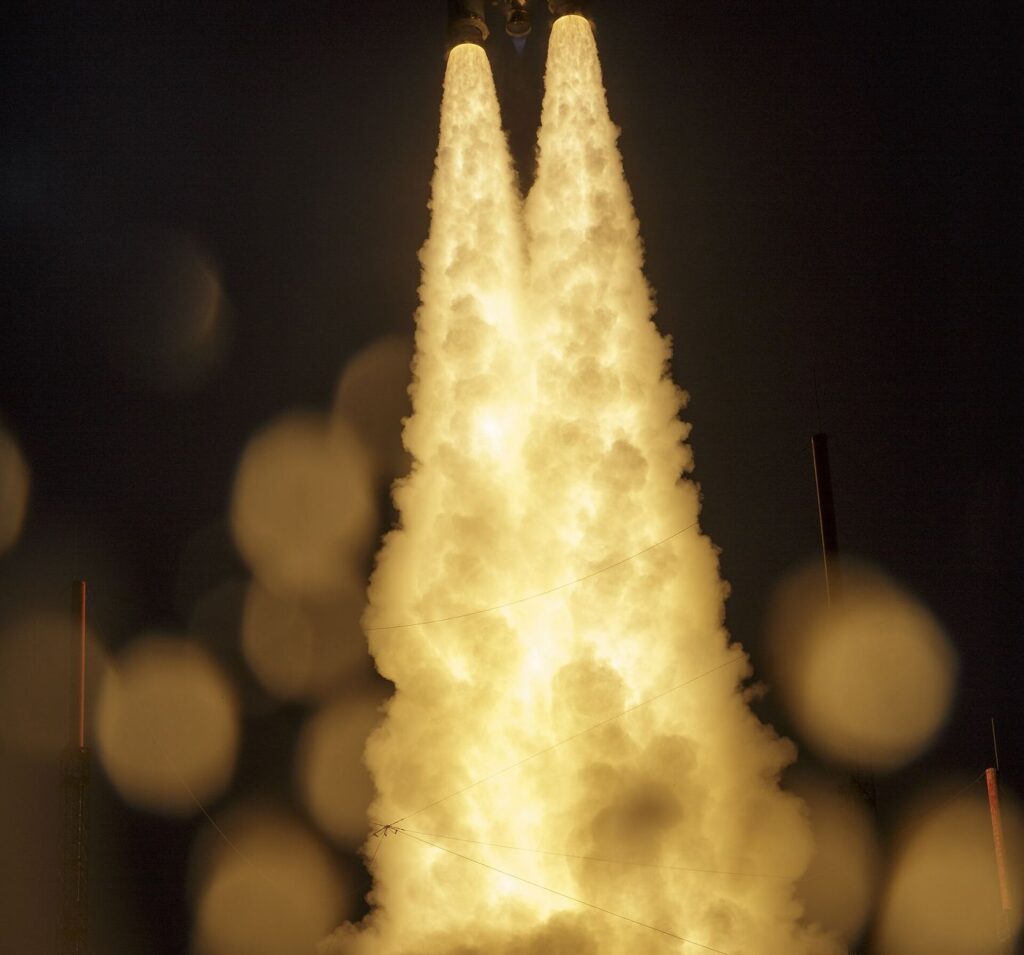
Amazon is preparing to launch 36 more Leo satellites, formerly Project Kuiper, on an Arianespace Ariane 6 rocket from Europe’s Spaceport in French Guiana on 24 November 2026. The mission, named LE-04, is the fourth Leo launch on Ariane 6 this year and the 16th launch for the constellation overall. Liftoff is targeted for 10:45 a.m. UTC, with the satellites deployed at about 465 kilometres altitude, after which Amazon’s team in Redmond, Washington, takes control. The full constellation is planned to reach 3,276 satellites offering broadband internet access around the world. Arianespace said the VA271 mission is the tenth flight of Ariane 6, and the second mission to fly the larger 36-satellite payload for Amazon Leo.
What the Evidence Shows
The launch follows a setback on 15 November, when a United Launch Alliance Vulcan rocket carrying Leo satellites suffered an anomaly on its inaugural mission and the payload was lost. Amazon said there is risk with any launch, especially an inaugural mission, and expressed confidence in ULA’s long-term plans. The previous day’s Ariane 6 countdown was also halted by a technical event affecting ground-support systems, before teams completed checks and set the new 24 November window. If successful, the mission will bring the total number of Leo satellites deployed to 136, still far behind SpaceX’s Starlink. Amazon’s constellation will compete directly with SpaceX’s Starlink, which already serves millions of customers, so reliability and launch cadence will matter greatly. Reporting and analysis from sources such as Wired track the same developments, and specialists following Amazon Leo satellite launch say the direction is now consistent across independent lines of evidence.
The Wider Context
The wider context is an industry learning to ship capability and restraint together. Products built around Amazon Leo satellite launch now launch with safety evaluations, usage data and rollback plans as standard, because enterprise buyers and regulators ask for them in the first meeting. Companies that treated those questions as friction are discovering they have become the purchase criteria.
What Happens Next
What happens next for Amazon Leo satellite launch depends less on another breakthrough than on the unglamorous work of reliability, pricing and support. The buyers evaluating it now are not enthusiasts; they are operators with budgets and auditors, and their checklists will decide the timeline. On the evidence of the current pilots, the technology has earned the right to be judged by them. You can follow related developments in our coverage of technology.
None of this will be settled by a single announcement, study or product launch. The pattern to watch is accumulation: independent confirmations, honest reporting of failures and steady improvement in the underlying numbers. Readers who follow those signals, rather than the loudest claim of the week, will understand this subject better than most of the commentary surrounding it suggests is possible.
