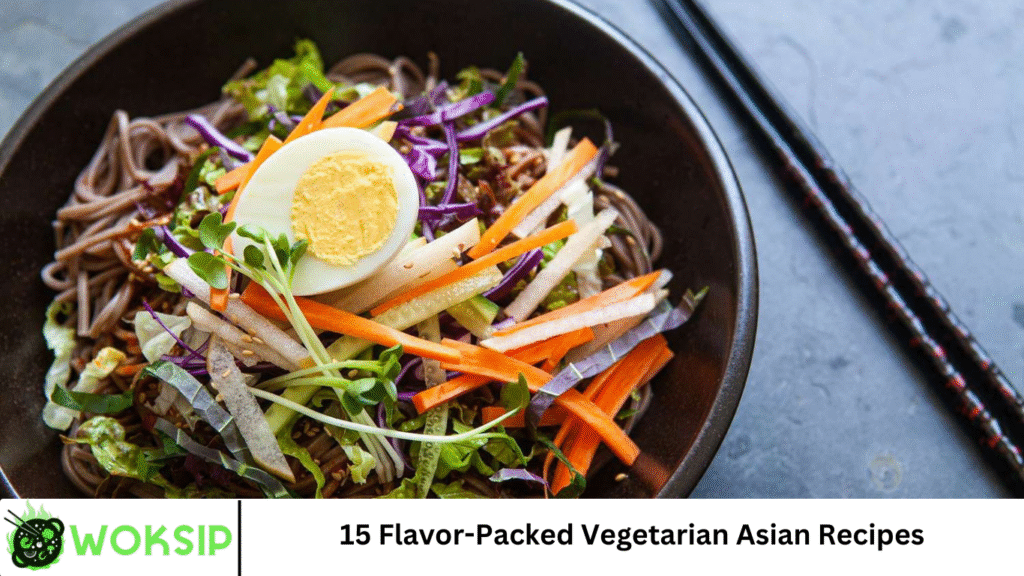
Looking to spice up your plant-based meal routine? Asian cuisine is the perfect place to start. With its rich variety of spices, sauces, and cooking techniques, Asian recipes are known for turning simple vegetables, tofu, and grains into bold and satisfying dishes.
Whether you’re a lifelong vegetarian or just trying to eat more meatless meals, these 15 vegetarian Asian recipes will bring color, flavor, and comfort to your table.
More Read: Taste the World: 29 Irresistible Street Food Recipes
Why Vegetarian Asian Recipes?
Asian cuisines naturally lend themselves to vegetarian cooking. From stir-fried vegetables in Chinese cuisine to coconut-laced curries in Thai kitchens, plant-based ingredients often take center stage.
Soy sauce, sesame oil, ginger, garlic, and fermented condiments like miso and gochujang are pantry staples across Asia, delivering deep umami flavor without any need for meat.
These recipes are not only full of flavor but also packed with nutrients, often featuring fiber-rich vegetables, protein-packed legumes, and satisfying whole grains. Plus, many are quick and easy to make, ideal for busy weeknights.
1. Kimchi Fried Rice
A Korean comfort food staple, kimchi fried rice is tangy, spicy, and deeply satisfying. Use well-fermented kimchi, day-old rice, sesame oil, and gochujang for a quick meal that packs a punch. Add tofu or a fried egg on top for extra protein.
2. Thai Green Curry with Eggplant
Creamy, spicy, and aromatic, this Thai green curry features tender eggplant, bell peppers, and tofu simmered in coconut milk and green curry paste. Serve it over jasmine rice for a warming, comforting meal.
3. Chinese Garlic Bok Choy Stir-Fry
Simple yet flavorful, this stir-fry features crisp-tender bok choy sautéed in garlic and sesame oil. Ready in under 10 minutes, it’s perfect as a side dish or light main course with steamed rice.
4. Chana Masala
A classic Indian dish made from chickpeas simmered in a tomato-onion gravy with cumin, coriander, garam masala, and turmeric. Serve it with basmati rice or naan for a hearty vegetarian dinner.
5. Japanese Miso Soup with Tofu and Seaweed
This umami-rich soup is a staple in Japanese homes. Silken tofu, wakame seaweed, and scallions are gently simmered in miso broth for a nourishing, light starter or meal.
6. Vietnamese Vegetarian Pho
This plant-based version of Vietnam’s beloved noodle soup uses a fragrant broth infused with star anise, cloves, cinnamon, and ginger. Add rice noodles, mushrooms, bok choy, and herbs for a refreshing yet cozy bowl.
7. Spicy Korean Tofu Stew (Soondubu Jjigae)
This spicy, comforting stew features silken tofu, mushrooms, and vegetables simmered in a rich gochugaru-spiced broth. Traditionally served bubbling hot in a stone pot.
8. Chinese Mapo Tofu (Vegetarian Version)
A plant-based twist on the Sichuan classic, this version uses fermented black beans, chili oil, and mushrooms in place of meat for a spicy, numbing, and savory experience. Serve with rice to balance the heat.
9. Indonesian Gado-Gado
A vibrant salad of blanched vegetables, tofu, tempeh, and boiled eggs (optional) topped with a creamy, spicy peanut sauce. It’s refreshing, filling, and full of texture.
10. Thai Basil Tofu Stir-Fry (Pad Krapow Tofu)
This fiery Thai street food favorite gets a vegetarian makeover with crumbled tofu stir-fried with garlic, chilies, and fresh Thai basil. Best served over jasmine rice with a fried egg on top.
11. Korean Japchae (Sweet Potato Noodle Stir-Fry)
Chewy glass noodles made from sweet potato starch are stir-fried with colorful vegetables and tossed in a soy-sesame sauce. A popular Korean party dish that’s equally great for weeknight dinners.
12. Indian Palak Paneer (or Tofu Paneer)
This creamy spinach curry is usually made with paneer cheese, but tofu makes a great vegan substitute. It’s rich, mildly spiced, and perfect with rice or roti.
13. Chinese Scallion Pancakes
Flaky, savory, and slightly chewy, these pan-fried pancakes are infused with green onions and make a great snack, appetizer, or side dish. Serve with soy-vinegar dipping sauce.
14. Malaysian Vegetable Laksa
A rich and spicy noodle soup with a coconut milk base, laksa is loaded with tofu, eggplant, bean sprouts, and rice noodles. Fragrant with lemongrass and curry paste.
15. Japanese Vegetable Tempura
Light, crispy batter coats slices of sweet potato, bell pepper, and broccoli in this classic Japanese dish. Serve with a soy-based dipping sauce for the ultimate crunchy treat.
Tips for Cooking Vegetarian Asian Meals at Home
- Stock Up on Pantry Staples: Keep soy sauce, sesame oil, miso, rice vinegar, coconut milk, and curry pastes on hand.
- Invest in Aromatics: Garlic, ginger, scallions, and chilies are essential for building bold flavors.
- Use the Right Tofu: Silken tofu for soups, firm or extra-firm for stir-fries and grilling.
- Balance Flavors: Asian cooking is about harmony—balance salty, sweet, sour, spicy, and umami.
- Don’t Skip Fresh Herbs: Basil, cilantro, and mint add brightness and authenticity.
Frequently Asked Question
Are these vegetarian Asian recipes also vegan?
Many of the recipes are naturally vegan or can be easily adapted. For instance, you can replace eggs with tofu in Kimchi Fried Rice or use plant-based milk in curries. Always check for ingredients like fish sauce, oyster sauce, or paneer and swap with vegan alternatives when needed.
Where can I find ingredients like miso, gochujang, or Thai basil?
These ingredients are commonly available at Asian grocery stores, health food stores, and online retailers. Some mainstream supermarkets also carry them in their international or global foods aisle.
Are these recipes suitable for beginners?
Yes! Most of the recipes are quick, simple, and designed with home cooks in mind. Step-by-step instructions and minimal prep make them accessible, even if you’re new to Asian cooking.
Can I make these dishes ahead of time or meal prep them?
Absolutely. Dishes like Chana Masala, Japchae, and Thai Green Curry store well and taste even better the next day. Cook in batches and refrigerate or freeze for later.
Are these vegetarian recipes healthy?
Yes, most dishes are rich in vegetables, legumes, and whole grains, offering a balance of fiber, protein, and essential nutrients. They’re flavorful without relying on heavy oils or processed ingredients.
What type of tofu should I use for different recipes?
Use silken tofu for soups like Miso Soup or Soondubu Jjigae, and firm or extra-firm tofu for stir-fries and curries like Thai Basil Tofu or Green Curry. Press tofu before cooking to remove excess water and improve texture.
Can I adjust the spice level in these recipes?
Definitely. Many Asian dishes use chili paste, flakes, or fresh chilies, which you can increase or reduce to taste. You can also serve spicy condiments on the side for flexibility.
Conclusion
These 15 flavor-packed vegetarian Asian recipes are a celebration of color, taste, and culture. They show that going meatless doesn’t mean sacrificing satisfaction. With the right ingredients and techniques, you can recreate the comforting, vibrant dishes of Asia right in your own kitchen. Whether you’re making a quick stir-fry or a simmered curry, these recipes are sure to become favorites in your meal rotation.