
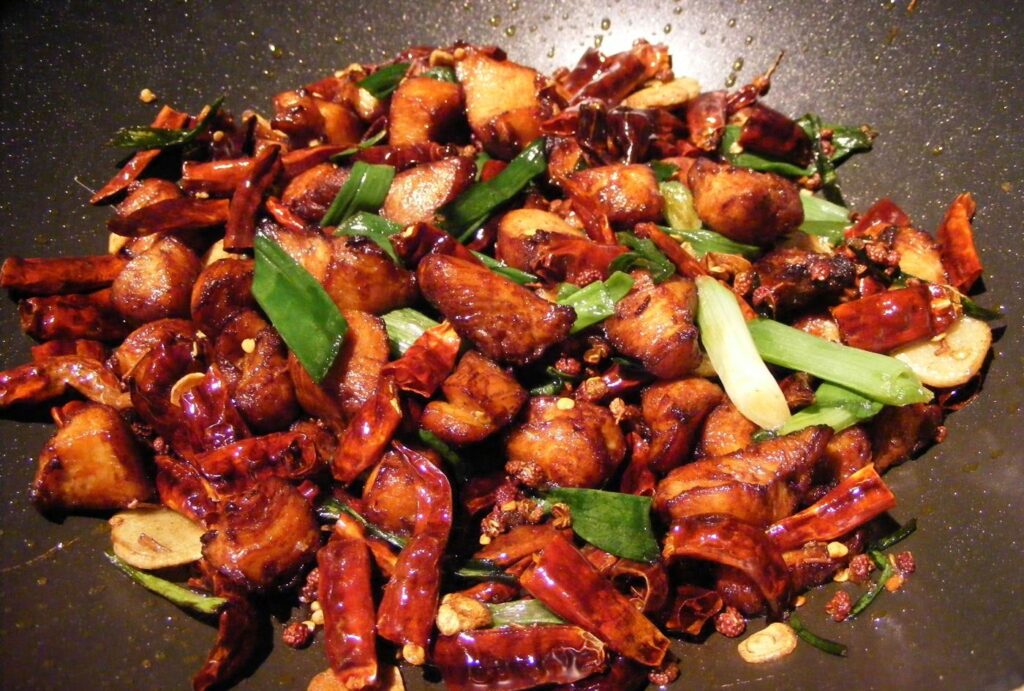
Every home cook who has eaten a great stir-fry has had the same thought: my wok at home does not do this. The gap is physics — restaurant burners output several times a home hob’s heat — but the conclusion is wrong. The techniques that make restaurant stir-fries great are mostly separable from the jet engine, and as our kitchen series has tested batch by batch, they transfer to an ordinary kitchen remarkably well.
The master technique is batch discipline. Restaurants cook in small loads so the wok stays screaming hot and ingredients sear instead of steaming; home cooks crowd the pan and boil their dinner in its own juices. Cook in two or three small batches, combine at the end, and the transformation is embarrassing in its simplicity. Second: dry ingredients. Washed vegetables weep water; pat them dry, and proteins too, because surface moisture is the enemy of the sear you are chasing.
Velveting and the Sauce Architecture
Velveting — marinating sliced protein in cornflour, egg white and a little oil before a brief blanch in water or oil — produces the silky texture of takeaway chicken that no amount of frying at home seems to match. It is in every professional kitchen’s repertoire and takes ten minutes to learn. Sauce architecture matters equally: restaurants mix the sauce in a bowl beforehand — soy, wine, sugar, stock, cornflour slurry — because a stir-fry’s final minute allows no measuring. Cookbooks and resources such as Serious Eats’ wok technique guides document the full method, including the home-burner adaptations.
The Home Wok, Honestly Assessed
A Word About the Wok Itself
Equipment questions deserve one clear paragraph. A flat-bottomed carbon-steel wok suits most home hobs, seasons beautifully, and asks only to be dried and oiled after use; non-stick coatings, whatever their other virtues, cannot take the heat a stir-fry wants and should retire to egg duty. Size matters in the counterintuitive direction: a wok large enough for the food to move beats a small one that crowds it, and the lid you improvise from a baking tray will steam greens better than any gadget sold for the purpose.
The rest is practice with a forgiving cuisine. Stir-frying tolerates substitution — the greens you have, the protein on offer — better than almost any technique, and its feedback is instant: the dish tells you, in texture, whether the pan was hot and the batches small. Keep the sauce mixed, the ingredients dry, the order written on a sticky note the first five times. By the sixth, the ritual runs itself, and the home wok stops imitating the restaurant’s. It becomes its own thing, which was always the achievable goal.
You will not get full wok hei — the smoky breath of the wok — from a domestic hob, and chasing it with a blowtorch is a hobby, not a requirement. What you will get is ninety per cent of the result: seared, glossy, distinct ingredients in a sauce that coats rather than pools. The restaurant’s real secrets were never fire. They were order, dryness and restraint — and those fit in any kitchen.
