
For many tea lovers, the ritual is the point: kettle on, bag in the cup, a few quiet minutes while the leaves steep. A new study of 28 tea brands suggests that what the bag is made from may matter almost as much as the tea inside it. Researchers found that infusions from plastic tea bags contained between 555 and 2,498 microplastic particles per cup, while loose-leaf, or bulk, tea contained just 0.3 to 2.4 particles per cup. That is not a small difference. It is a gap of hundreds, and in some cases more than a thousand, times.
The findings, published in npj Science of Food, will not necessarily make anyone pour a good cup down the sink. They do, however, give tea drinkers a clearer picture of where those particles come from, what else can travel with them, and how simple changes to a daily brew can sharply reduce exposure.
What the researchers actually did
The team compared 14 bagged tea brands with 14 bulk tea brands. They prepared infusions under controlled brewing conditions designed to resemble a normal cup: water at 95 degrees Celsius and a three-minute steep. They then examined the drinks for microplastic particles and for certain chemicals associated with plastics, including bisphenol A, often shortened to BPA, and phthalate esters, which are used as plasticizers.
To identify the particles, the researchers used a technique called ATR-FTIR, which helps reveal what a material is made from. For the chemical side of the work, they used GC-MS/MS, a sensitive laboratory method for measuring small amounts of specific compounds. That combination matters for readers of the Drink Bar, because it separates two different questions. One is how many particles end up in the cup. The other is what those particles, and the packaging around them, may carry with them.
The largest particles told a particularly clear story. Debris larger than 100 micrometres from the tea bags consisted exclusively of polyamide fibres, consistent with the bag material itself breaking down in hot water. In other words, the bags were not simply trapping contamination from elsewhere. They appeared to be shedding material of their own. Bulk tea showed a more mixed and much lower profile, with fragments linked to background environmental and industrial contamination rather than to a single packaging source.
What the numbers mean, and what they do not
Microplastics are tiny plastic particles, and scientists are still working to understand exactly how different amounts, sizes and types affect human health over time. This study should not be read as proof that a cup of bagged tea causes a specific illness. The researchers also modelled health risks from the chemicals they measured and found that cumulative hazard index values stayed below the usual risk threshold.
At the same time, one chemical finding stood out. BPA intake from bagged tea reached 21.7 percent of the tolerable daily intake set by the European Food Safety Authority. One cup, on that measure, did not cross the limit. But tea is rarely a once-a-year habit. Many people drink several cups a day, every day, and BPA and similar chemicals can also come from other foods, drinks and packaging. A source that can be reduced easily is therefore worth taking seriously, even when the overall risk estimate remains below the threshold.
The practical lesson is about exposure, not panic. If two brewing methods deliver a similar cup and one releases hundreds or thousands more plastic particles, choosing the lower-exposure method is a reasonable, low-cost decision while research continues.
How to brew with fewer plastics
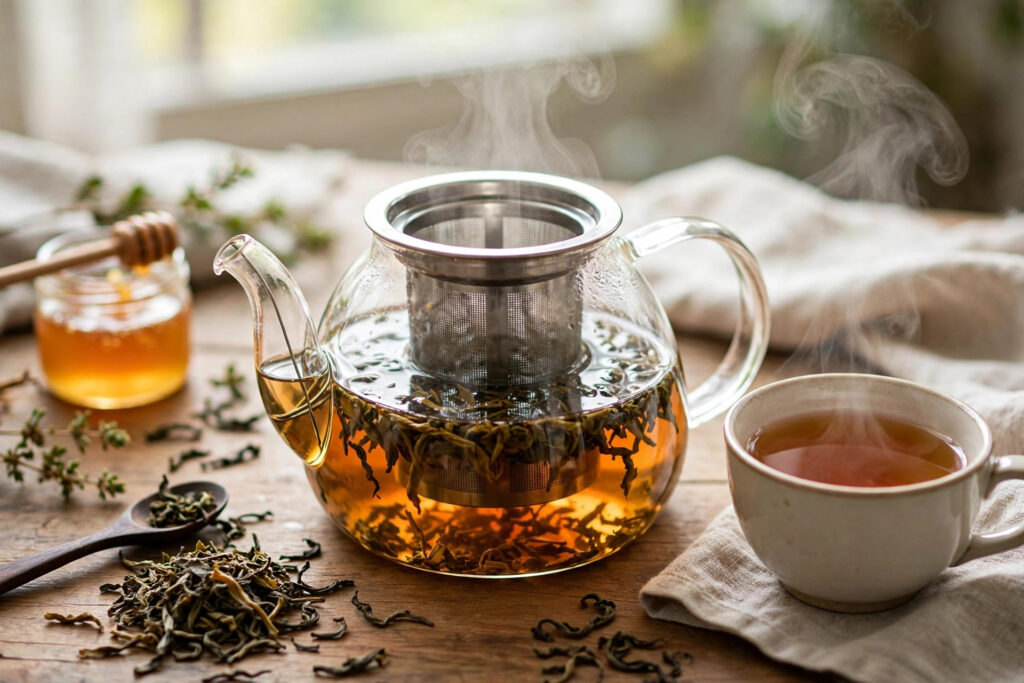
The easiest switch is loose-leaf tea. Use a stainless-steel infuser, a reusable metal strainer, or a teapot with a built-in metal filter, and let the leaves open properly in the water. Many drinkers find the flavour improves as well, because loose leaves generally have more room to unfurl than leaves confined in a small bag. Start with one teaspoon per cup, adjust the steeping time to the tea, and compost the spent leaves where facilities allow.
If bags are more convenient for work or travel, read the packaging carefully. Some bags are made principally from paper, others from plant-based materials, and others from plastic polymers such as polyamide. Brands do not always make the material obvious on the front of the box, so check the manufacturer information or choose products that clearly describe a plastic-free bag. Avoid squeezing a hot plastic bag hard against the side of the cup with a spoon, and do not leave it steeping far longer than needed.
It is the same practical mindset behind our guide to troubleshooting a failed login: small, everyday problems often become easier once you identify the source and change one habit at a time. For tea, the source may simply be the bag.
A better daily cup
None of this needs to spoil a beloved ritual. Keep the kettle, the favourite mug and the quiet three minutes. Just give the leaves a different home. A metal infuser costs little, lasts for years, washes easily and removes the most obvious source of particles identified in this study. For many tea lovers, that makes loose-leaf less of a sacrifice and more of an upgrade: cleaner brewing, fuller leaves and a cup shaped by the tea itself, not by the plastic that carried it.
