
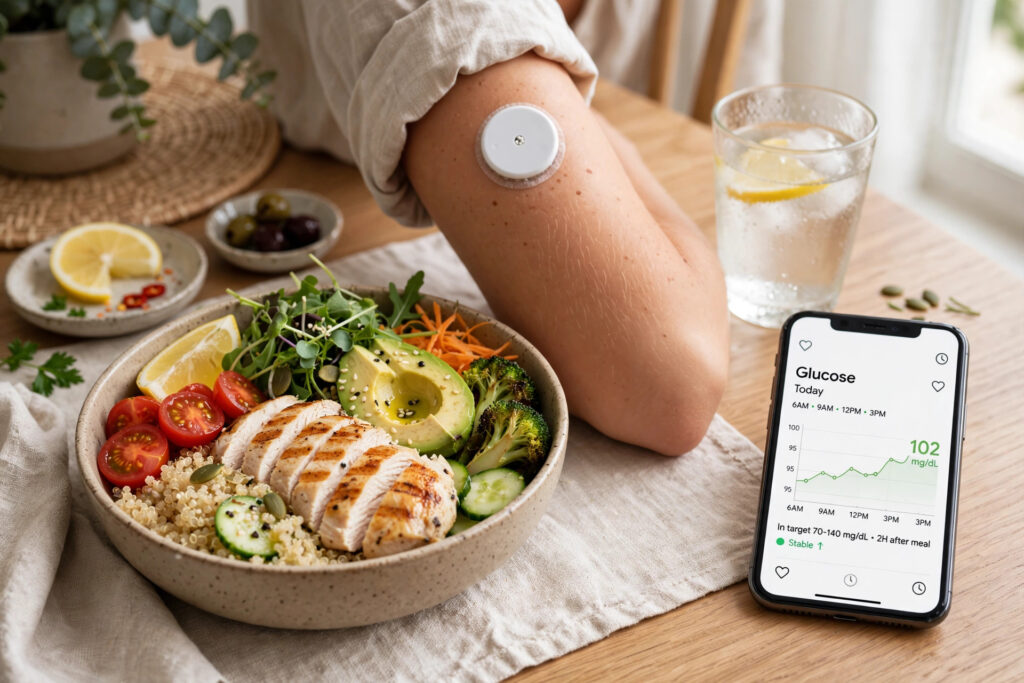
What happens after breakfast? For a person living with type 2 diabetes, the answer used to arrive hours later, if it arrived at all: a finger-prick reading here, an A1c result every few months there. A major new trial suggests that seeing blood sugar move in real time, meal by meal, can change the whole day. Adults who used continuous glucose monitors spent about five more hours a day in their target blood sugar range than adults receiving routine care, even though they were not using insulin.
The research, published in the New England Journal of Medicine and reported by the University of Colorado Anschutz, is being described as the largest clinical trial of its kind. For readers interested in food, its most useful message may be the simplest one: when people can see exactly how a meal affects them, everyday eating choices become clearer, more personal and easier to adjust.
The largest trial of its kind
The trial followed 283 adults across 22 primary care practices in the United States for 26 weeks. It focused on people with type 2 diabetes who do not take insulin, a large group that has historically received less research attention in this area. An estimated 20 million adults in the United States have type 2 diabetes without using insulin, according to the study team, and many do not reach recommended blood sugar targets despite treatment advances.
The differences were substantial. Alongside the extra five hours a day in range, nearly twice as many monitor users achieved an A1c below 7 percent, a common treatment goal. The improvement in A1c, which reflects average blood sugar over roughly three months, was 0.9 percentage points greater in the monitor group than in the routine-care group. The researchers noted that this exceeded the level generally considered clinically meaningful.
Just as important, the care took place in ordinary primary care settings, where most people with type 2 diabetes are treated. This was not a benefit shown only in a specialist clinic with an unusual level of support.
What a sensor reveals about lunch
A continuous glucose monitor uses a small sensor worn on the body to track glucose throughout the day and night. Readings flow to a receiver or phone app, creating a moving picture rather than a single snapshot. That picture is where food enters the story. A bowl of white rice, a large sweetened coffee, a sandwich eaten quickly at a desk and the same sandwich eaten with vegetables and followed by a walk may all produce different curves.
With a monitor, those differences stop being abstract advice. A sugary drink may show a fast, sharp rise because liquid sugar is absorbed quickly and provides little fibre, protein or fat to slow it down. A meal built around vegetables, beans, whole grains, eggs, fish or yoghurt may rise more gradually. Adding fibre, swapping a refined side dish for a whole-grain one, eating vegetables and protein before the starch, or taking a short walk after eating can all be tested against a person’s own readings, rather than against a generic chart.
That feedback can also prevent an overly rigid approach to eating. Two people may respond differently to oatmeal, fruit or bread. Portion size, sleep, stress, medication, activity and the order in which foods are eaten can all influence the result. A monitor does not replace medical advice, but it can turn a follow-up appointment into a more specific conversation about real meals eaten at home, at work and in restaurants.
Making the technology work day to day
Like any food or health tool, a monitor only helps if the information is easy to reach. Keep the app signed in, check sensor placement, and learn what the trend arrows mean before a busy breakfast rush. If the technology itself becomes a barrier, our guide to troubleshooting a failed login covers the basic account checks that solve many everyday access problems. Small fixes matter when the goal is to glance at a reading and get on with cooking, eating or walking.
People considering a monitor should discuss it with their primary care provider, particularly because recommendations and insurance coverage have historically been stronger for people who use insulin. The researchers hope the new evidence will strengthen guidelines and widen access for people who do not. Anyone changing medication, making major dietary changes or repeatedly seeing very high or low readings should seek professional guidance rather than relying on the sensor alone.
Food choices, with feedback
The promise of continuous monitoring is not that it turns every meal into an exam. It is that it replaces guesswork with timely, personal information. Five more hours a day in range is a meaningful outcome on its own. Behind that number are hundreds of ordinary decisions: choosing water over a sugary drink, building a plate with more fibre, noticing what a favourite takeaway does, and learning which breakfast keeps the morning steady. Seen that way, the sensor is less a gadget than a feedback loop between the kitchen table and better health.
